 CORDOBA
Inhabitant: Cordobes
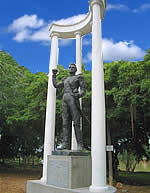
Established in 1951, Cordoba was named after José María
Cordoba, one of the most outstanding leaders in Colombia's fight for
independence.
Before 1951, the region was part of the department of Bolívar.
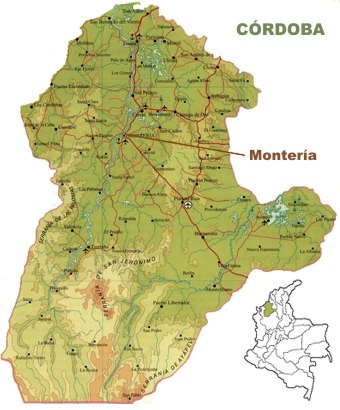
It lies along the coast of the Carribean Sea at the north end of
Colombia. It is bordered by the departments of Bolívar, Sucre and
Antioquia. Its surface covers an area 25,020 square kilometres.
The department is divided in two large geographical zones. A
mountainous zone to the south and a plain conformed by the Sinú
and San Jorge
valleys to the north.
Before the arrival of the Spaniards, the territory formed a large
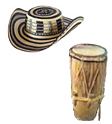
part of the Zenú native empire. Although many of this
civilization's traditions and customs have disappeared, some remain. For
example, the famous and still popular hat known as
the
sombrero vueltiao or
sinuano, is made by the native
Zenú tribe that lives in the marsh of Momil, located in lower
Sinú.
The current population of Cordoba (nearly 1, 390,000), is the result
of a mixture between Spaniards, Natives, Blacks and immigrants from
other countries.
Its main economic strength is agriculture. Córdoba raises more
livestock than any other department in Colombia. Cotton, cocoa, coconut
and bananas are significant cash crops. Other sources of income include
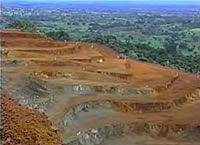
fishing and nickel mines.
One of the important tourist places in Córdoba is Paramillo
National Natural Park, which is shared with the department of Antioquia.
Capital: Monteria
Once called the “city of the swallows”, Montería is now known
as “The cattle-raising capital of Colombia” and the “Pearl of the
Sinú”. It was founded in 1777 with the name San Jerónimo
of Montería and it has been the departmental capital since 1951.
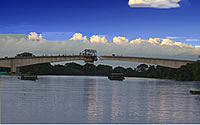
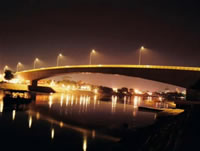
It has approximately 350,000 inhabitants. It is located in the
Sinú valley and is a river port.
Recently, great advances have been made in its architectural, road,
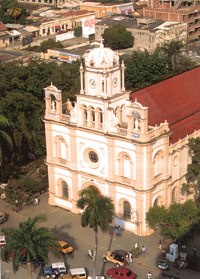
and commercial development. The beautiful Cathedral of San
Jerónimo is remarkable, as are the parks of Bolívar,
Méndez and Laureano Gómez. This progressive city is also
home to the University of Cordoba.
 CORDOBA, C0L0MBIA - SOUTH
AMERICA
CORDOBA, C0L0MBIA - SOUTH
AMERICA  Español
 Français