|
|
 |
|
The Eastern Plains (The Orinoquia)
ARAUCA
Inhabitants: araucanos
Arauca's name derives from Arawak, a native tribe that inhabited this
land.
The Araucan territory was discovered by Jorge de Espira in 1536. Nicolas
de Federman arrived a year later, to conquer the land. In 1628 the
Spanish colonization started and it was extended up to the foundation of
the Republic of Colombia.
Arauca was part of the province of Casanare, the departments of
Cundinamarca and Boyacá, and part of the Notional Territories as
Comisaría (1911) and Intendencia (1953).
Arauca became a department in 1991.
At present, its population consists of about 275,000 people,
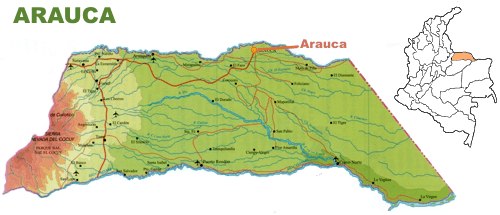
Its territory covers an area of 23,818 square kilometres. It is located
in the eastern side of Colombia, to the north of the Colombian Orinoquia
(also known as The Eastern Plains) and borders the departments of
Vichada, Casanare and Boyacá, as well as the Republic of
Venezuela.
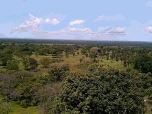
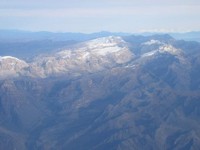
Seventy-five per cent of the land is flat, but the eastern cordillera
(mountain range) borders the western side of the territory where the
Sierra Nevada of the Cocuy stands.
At the foot of the cordillera, the soil is fertile and ideal for
breeding livestock.
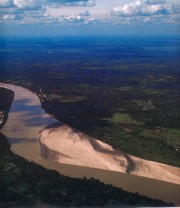
Water is an important natural resource in Arauca, for there are many
rivers such as the Arauca, Casanare, Tame and Tocoragua, among others.
Oil fields in Caño Limón have increased Arauca's wealth in
recent years.
It is a region with beautiful landscapes and it has one of the richest
variety of birds in Colombia's east.
In this department, one finds El Cocuy Natural National Park, which is
considered a flora and fauna sanctuary, and the International Bridge
José Antonio Páez, a part of the region's historic and
artistic heritage.
Capital: Arauca
It was founded in 1785. It has been the capital city of the region since
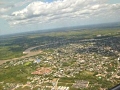
1911. Most of the population is concentrated along the shore of the
Arauca river. Their main occupation is raising livestock.
Arauca city is a port bordering Venezuela.
It is a vibrantly commercial place and home to 42,000 people.
Among the places of great interest, are the Simón Bolívar
Park, the Malecón eco-turístico , Las Toninas
Aguaparque Pool, the Brisas del Arauca tourist viewpoint, the Araucan
Academy of History, the House of Culture and Fine Arts, the Raúl
Loyo Rojas Library, the Libertadores forum and the José Antonio
Páez bridge, among many others. There are four protected native
populations: the Matecamdela, the San José de Lipa and the
Vorágine.
|
 Español
 Français




 © colombia-sa